
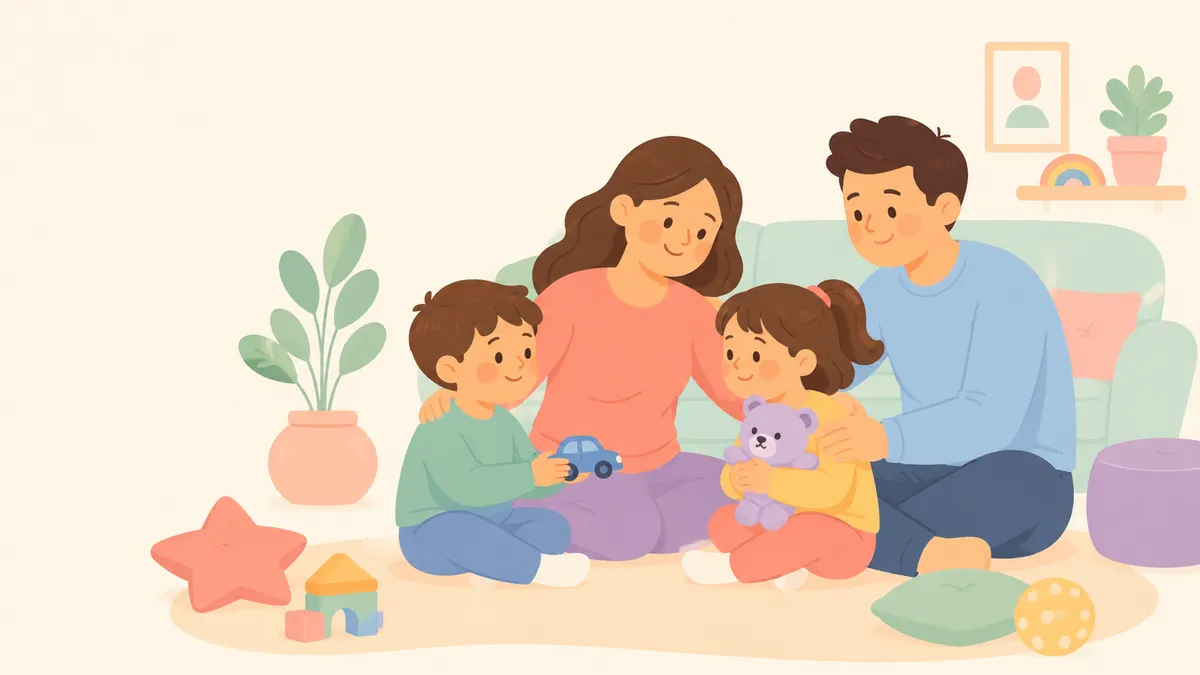
Why Keeping Score Makes Things Worse
When children hear who got more, who started it, or who had a turn last, they may focus on winning instead of solving the problem. Try moving away from scorekeeping and toward shared family rules that help everyone feel heard during everyday disagreements with less pressure.
Tonight, notice the moments when you compare siblings without meaning to. Replace comments about fairness with simple reminders like everyone gets care, everyone gets a chance, and everyone is learning. This small shift can change the mood of a tense moment and help children feel secure.
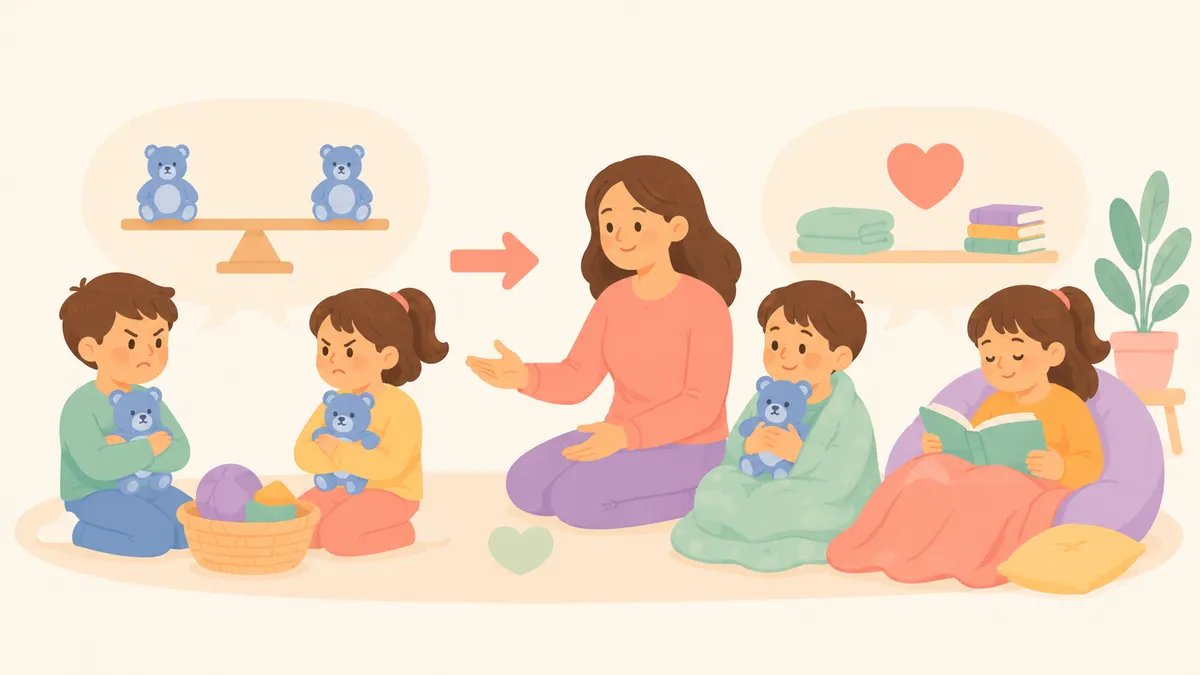
How To Handle Sibling Fights Calmly
Siblings often fight over toys, attention, space, and choices. Before stepping in, pause and listen to each child’s view. You do not need to decide who is the better child or who deserves more. Your goal is to help them express feelings and find a solution that respects both sides.
Start with calm questions that guide the conversation. Ask what happened, what each person needs, and what could make the situation better. Children can learn to solve small conflicts when adults stay steady and avoid turning every disagreement into a contest between siblings and their competing feelings.
How To Give Each Child Attention
Children are more likely to cooperate when they feel their parents see them as individuals. Give each child moments of attention that are not connected to what a sibling did first. This helps reduce the urge to compete for every bit of praise or recognition and reminds them they matter.
Try creating small routines that celebrate each child’s interests. One child may choose the family game while another chooses the bedtime story. These moments show that different preferences can exist without one sibling taking something away from another in the family and daily life.
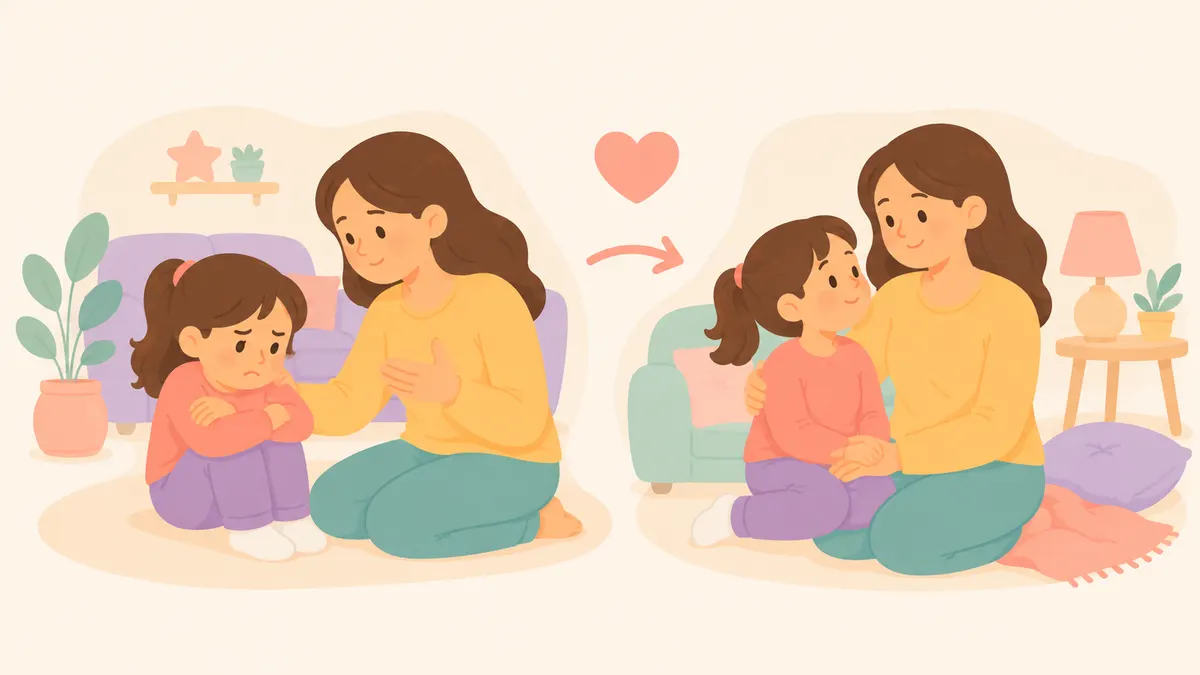
What To Say During Sibling Arguments
Arguments often grow when siblings feel they must prove they are right. Instead of asking who caused the problem, help them describe the problem itself. A shared focus makes it easier for children to work together instead of defending their own side or trying to win the discussion.
Use phrases that keep the conversation balanced, such as I want to hear both sides or let’s find a solution that works for everyone. These words remind children that family problems are handled together, not won by the loudest voice in the room today.
How To Build Fair Family Habits
Special moments do not have to be equal in every detail to feel fair. One child may need extra help today while another needs a turn tomorrow. Explain what is happening so siblings understand that fairness is about needs, not constant matching or making every experience identical.
End the day by noticing cooperation, kindness, or patience you saw between siblings. A quick bedtime reflection can help children remember positive moments instead of only the fights. Over time, they may begin to look for ways to connect and support each other more often.
Parents also ask
How do I stop my kids from comparing everything?
Start by naming the pattern and shifting attention away from who has more. Remind children that each person can have different needs, turns, and moments. Focus conversations on kindness, problem solving, and family expectations instead of matching every detail.
Should parents always treat siblings exactly the same?
No. Fairness does not require identical treatment in every situation. Children may need different things at different times. Explain your choices calmly so siblings understand the reason behind a decision instead of feeling like love or care is being measured.
What can I do when a sibling fight starts tonight?
Keep your voice calm, listen briefly to both sides, and avoid deciding who is the winner. Ask what happened and what could help repair the situation. Guide your children toward a shared solution rather than a final score of who was right.
Practical ideas from our team, not medical advice. For anything about your child's health, sleep, or development, please check with your pediatrician.
Turn today's idea into their own story
Make a 1-minute animated story where your child is the hero.
Start A Story