
How Do You Start Independent Play?
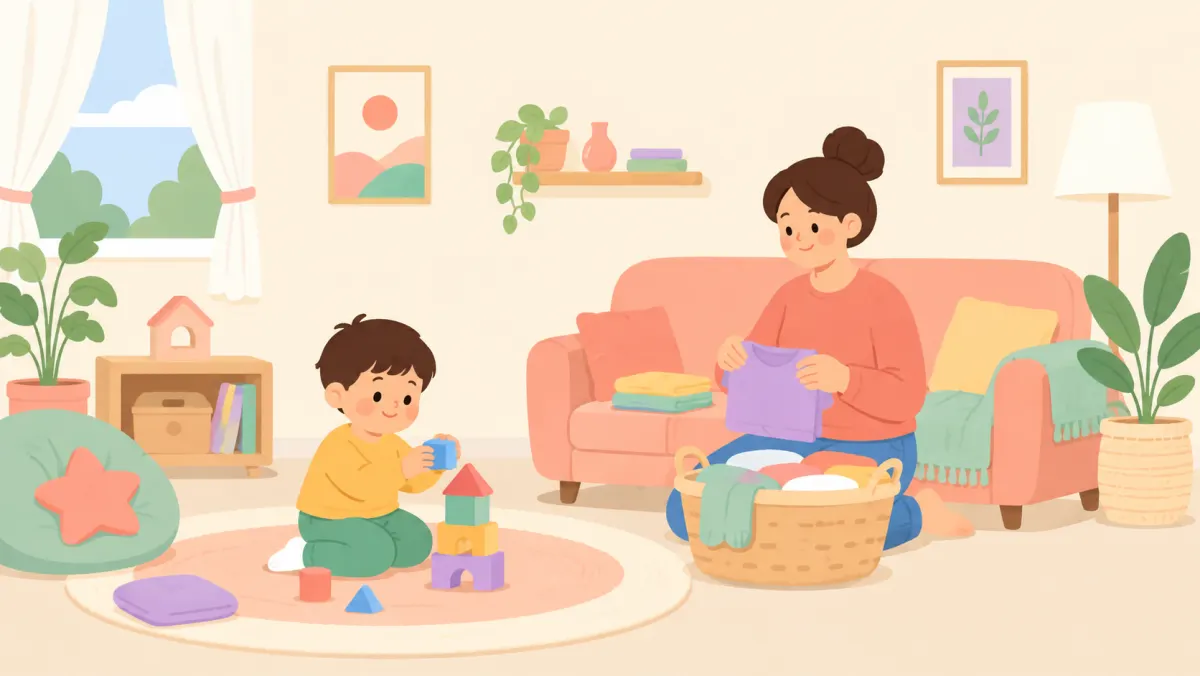
Start with a moment when your toddler is rested, comfortable, and not already asking for your attention. Sit together on the floor and begin something simple, like stacking blocks or arranging toy animals. Play alongside them for a few minutes, then slowly stop directing the activity. Let your child decide what happens next instead of suggesting another game.
Once they seem interested, tell them you are going to sit nearby while they play. You might fold a few towels or drink your coffee in the same room. Begin with just a minute or two, then join them again. The first goal is not a long stretch of quiet. It is helping your toddler discover that playing independently can feel pleasant and safe.
Which Toys Encourage Toddlers To Play Alone?
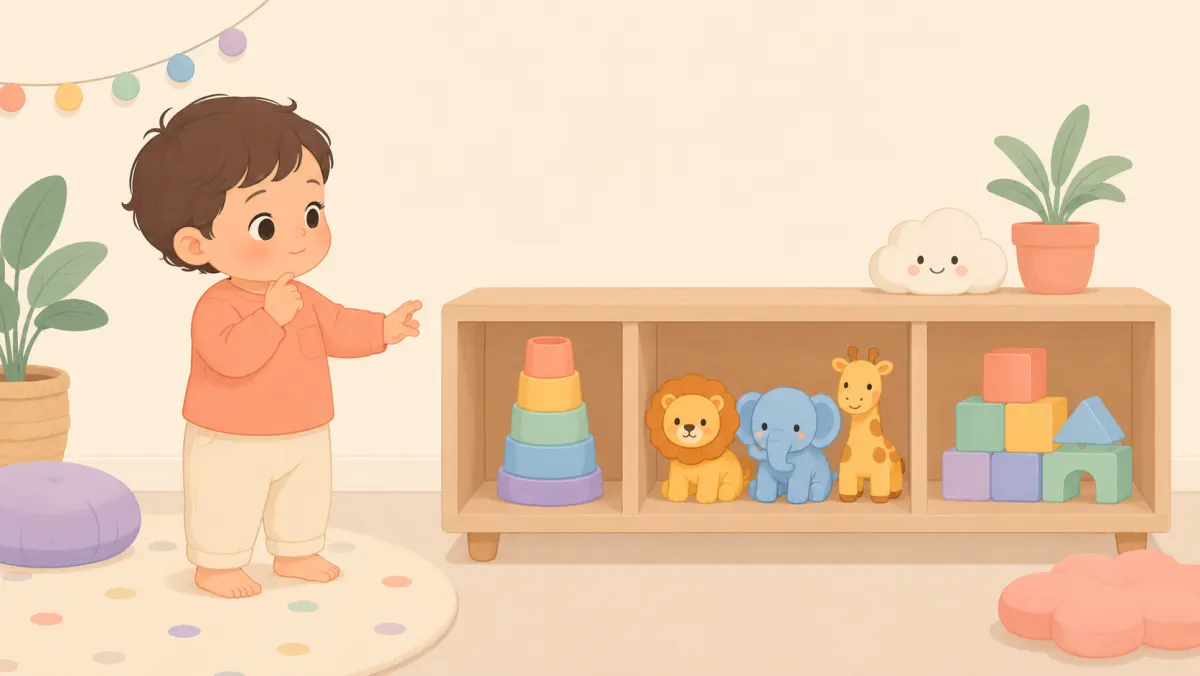
Choose toys that leave room for your child to decide what happens. Building blocks, chunky puzzles, toy cars, stacking cups, large pretend food pieces, and soft dolls are lovely starting points. You do not need a special activity kit or a cupboard full of new things. A few familiar favorites placed within easy reach are often enough to get a little game started.
Try putting four or five activities on a low shelf or in separate baskets. Keep the rest stored away and swap them occasionally when interest fades. You could make a small pretend kitchen with a bowl, wooden spoon, and toy vegetables. Choose age-appropriate items without loose small parts, and keep the play space safely within your supervision. Simple setups make it easier for children to follow their own ideas.
What If Your Toddler Keeps Following You?
Some toddlers will follow you the moment you stand up, even when their favorite toys are waiting. Rather than slipping away, explain what you are doing. Say something like, I am putting these clothes away, and you can keep building right here. Stay where they can see or hear you. If they come over, welcome them briefly and gently invite them back to their activity.
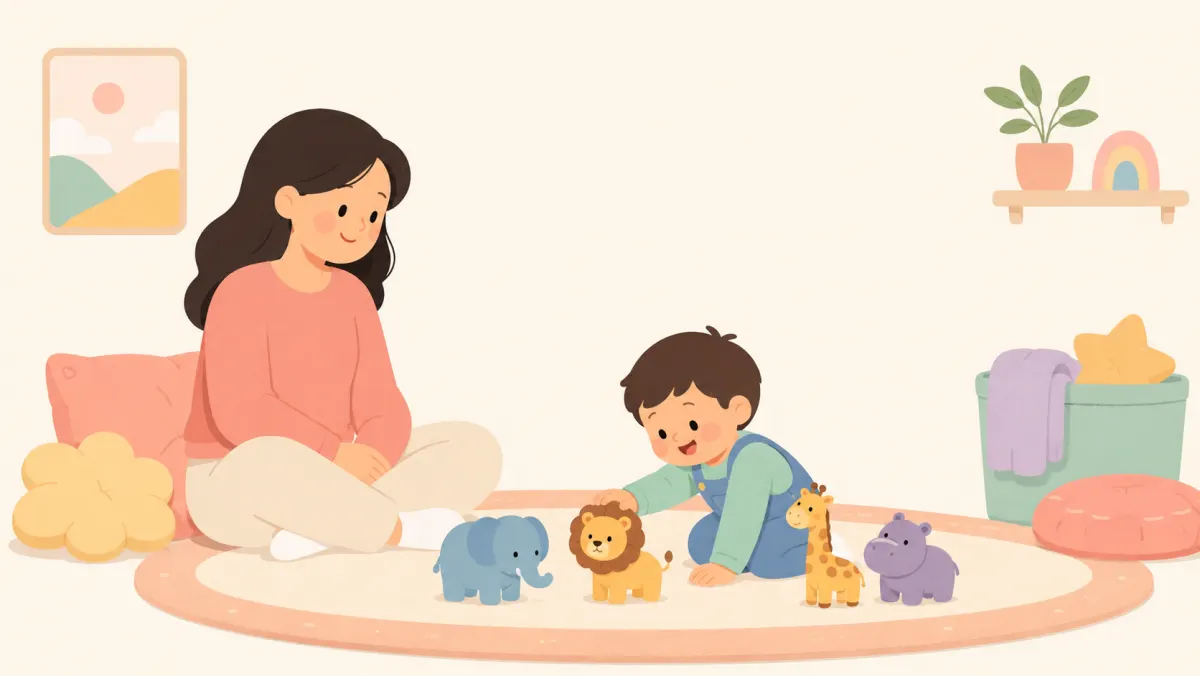
You can also try playing beside each other without doing the same thing. Your toddler might arrange toy animals while you sort laundry on the rug. Give them a little attention before returning to your task. If they need more connection, spend a few minutes playing together first. Independent play works better when it feels like a natural part of being together, not a sudden separation.
How Can You Build A Daily Play Routine?
Pick one predictable moment each day for independent play. After breakfast, before dinner, or while you prepare a simple snack can work well. Start by spending a few minutes together, then invite your child to continue while you do something nearby. Keeping the same general routine helps your toddler understand what comes next without needing a long explanation every time.
Try a small evening ritual tonight. Set out blocks on the living room rug, build a little tower together, and let your child take over. Sit nearby with your own quiet task. When the play naturally ends, notice something specific they made or tried. You do not need to praise every move. A simple comment about their colorful tower shows you were interested in what they enjoyed doing.
How Do You Encourage Longer Independent Play?
Once your toddler seems comfortable playing for a short stretch, give them room to continue without interrupting. It can be tempting to ask questions, offer another toy, or show them a better way to build something. Instead, watch quietly and let their ideas lead. If they pause, give them a moment to decide what to do next before stepping in.
Increase playtime gradually, following your child's interest rather than watching the clock too closely. Some days they may happily build for several minutes. Other days they may want you beside them almost immediately. Both are ordinary parts of family life. When they finish, reconnect with a cuddle, a little conversation, or a shared activity. The aim is enjoyable solo play, not making your child play alone for as long as possible.
Parents also ask
How long should a toddler play independently?
There is no single amount of time that every toddler needs to reach. Start with a minute or two if that feels comfortable, then gradually extend it when your child is enjoying themselves. A short, happy play session is more useful than pushing for a longer one that ends in frustration.
Should I leave the room during independent play?
No. Independent play simply means your child leads their activity without needing you to participate constantly. You can sit nearby, fold laundry, or prepare something in the same safe space. Toddlers still need appropriate adult supervision, even when they are happily occupied with their toys.
What should I do when my toddler says they are bored?
Try resisting the urge to introduce a brand-new activity immediately. Offer two simple choices, such as building a garage or making a home for toy animals. You can help them begin, then let them take over. Sometimes a little shared imagination is all they need to get going.
Practical ideas from our team, not medical advice. For anything about your child's health, sleep, or development, please check with your pediatrician.
Turn today's idea into their own story
Make a 1-minute animated story where your child is the hero.
Start A Story