
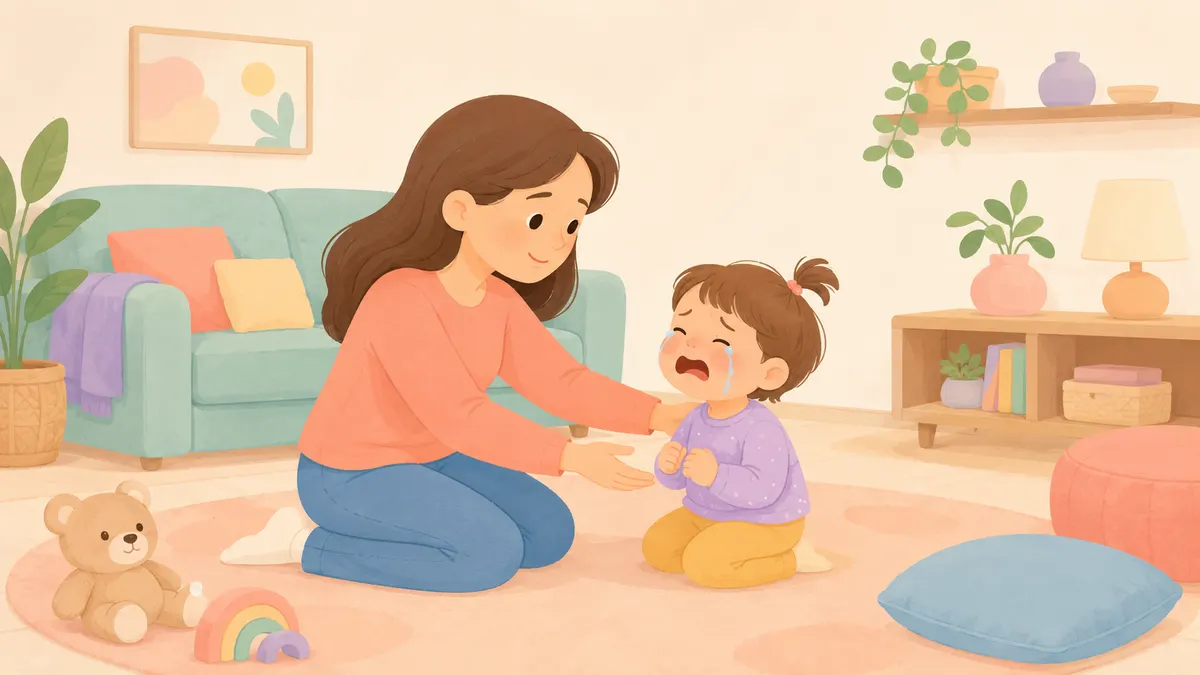
Why toddlers have big feelings
Young children often experience emotions before they have the words to explain them. A tantrum can happen when a child feels tired, frustrated, disappointed, or overwhelmed. Seeing the moment as a struggle with feelings, not a battle of wills, can help you choose a calmer response.
When your child is upset, your steady voice and simple actions can provide comfort. You do not need to fix every feeling right away. Stay close, keep limits clear, and give your child time to settle before talking about what happened or offering a solution.
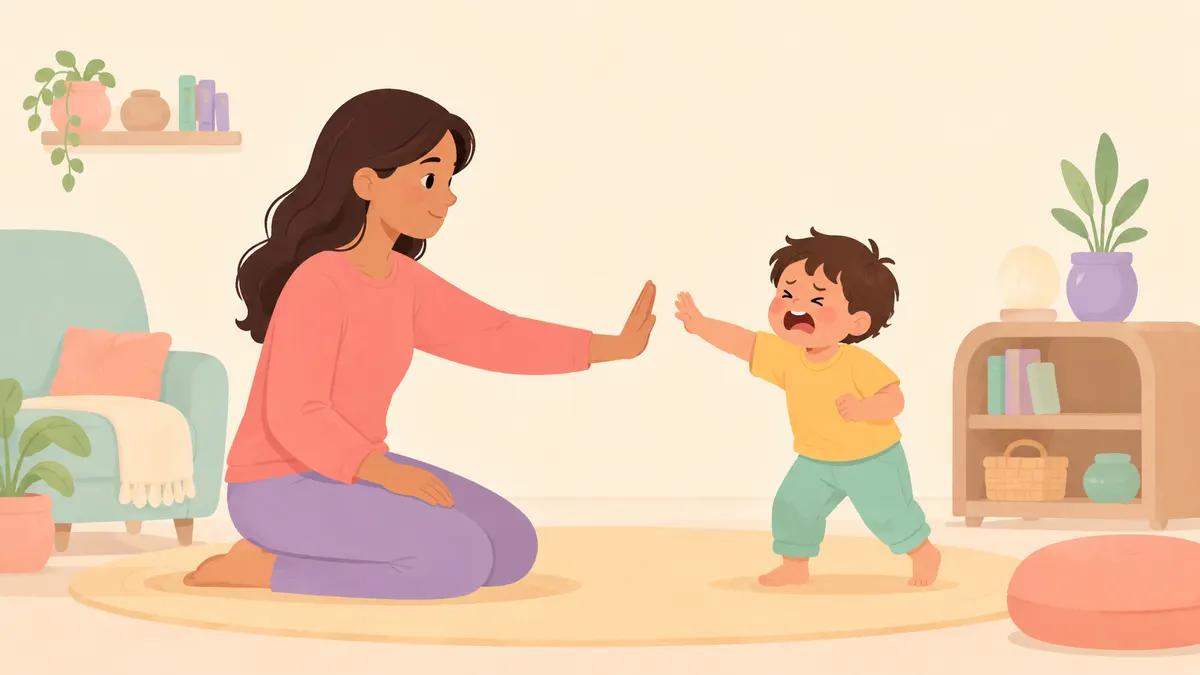
What to do during a tantrum
During a tantrum, start by keeping everyone safe and lowering the intensity of the moment. Use a quiet voice, fewer words, and a calm presence. You might say that you see they are upset and that you will stay nearby while they calm down.
Avoid long explanations when emotions are running high because your child may not be ready to listen. Offer simple choices when possible, such as sitting together or taking space. Your goal is to help your child move through the feeling while keeping the boundary in place.
How to help after emotions calm
After the storm passes, reconnect with your child through a hug, a gentle chat, or a shared activity. This is a good time to name the feeling and talk about what happened. Keep your words short so your child can understand and remember the lesson.
Help your child practice new ways to respond before the next hard moment arrives. You can pretend with toys, practice taking breaths, or show how to ask for help. Small practice moments make it easier for children to try new choices later.
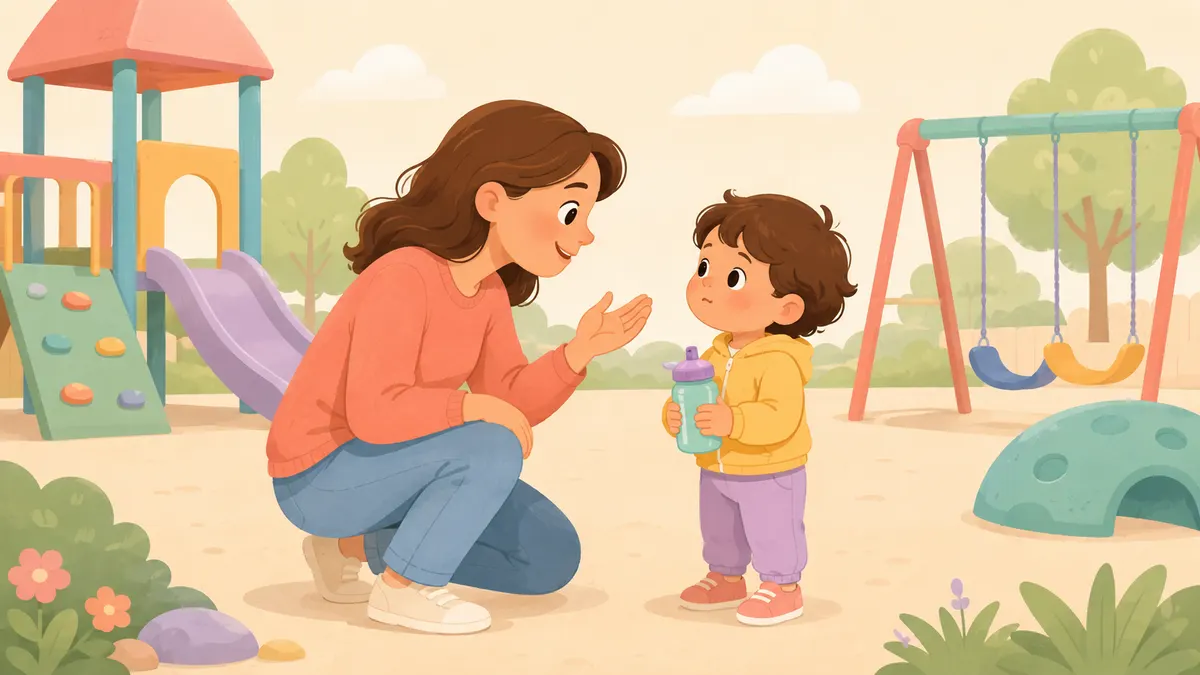
How to prevent common toddler tantrums
Many tantrums can be reduced by preparing for tricky moments. Give your child warnings before transitions, keep routines familiar, and offer small choices throughout the day. Feeling some control can make everyday changes easier for a young child during busy mornings, outings, and other daily activities.
Pay attention to patterns that happen around hunger, tiredness, or busy schedules. Adjusting the timing of activities and bringing comfort items can help some children handle changes more smoothly. Simple preparation can make difficult moments less frequent and easier to manage for the whole family.
How to stay calm as a parent
Your own emotions matter during a toddler tantrum. If you feel yourself getting overwhelmed, pause for a moment, breathe slowly, and use a quieter voice. A calm response from you can show your child what managing strong feelings looks like in everyday life.
Parenting through big emotions takes practice, and no parent handles every moment perfectly. After a difficult situation, think about what helped and what you might try next time. Each experience can teach you more about your child's needs and your own responses over time.
Parents also ask
Should I ignore my toddler during a tantrum?
You do not have to ignore your child. Stay nearby, keep your response calm, and let your child know you are there while holding the boundary. This helps your toddler feel supported without changing the limit because of the tantrum.
How can I stop toddler tantrums quickly?
Some tantrums end faster when adults lower their voice, use fewer words, and avoid adding more frustration. The goal is not always to stop the feeling immediately, but to help your child return to calm safely.
What should I say during a toddler tantrum?
Use short, gentle phrases that recognize the feeling and keep the limit clear. You might say that you know your child is upset and that you will help when they are ready to calm down.
Practical ideas from our team, not medical advice. For anything about your child's health, sleep, or development, please check with your pediatrician.
Turn today's idea into their own story
Make a 1-minute animated story where your child is the hero.
Start A Story