

How Can I Make Homework Time Easier?
Start by choosing a regular homework time that works with your family's evening. Some children prefer getting started shortly after school, while others need a snack and some free play first. Watch when your child seems most settled. Once you find a good window, try keeping it consistent. A predictable routine removes the daily argument about when homework should begin.
Make the transition gentle instead of announcing homework from across the room. Give your child a friendly five-minute reminder, offer some water, and invite them to help set up their supplies. You might say, 'Let's get your pencils ready, then we'll start with one small thing.' When homework becomes a familiar part of the evening rather than a sudden interruption, getting started often feels easier.
Where Should My Child Do Homework?
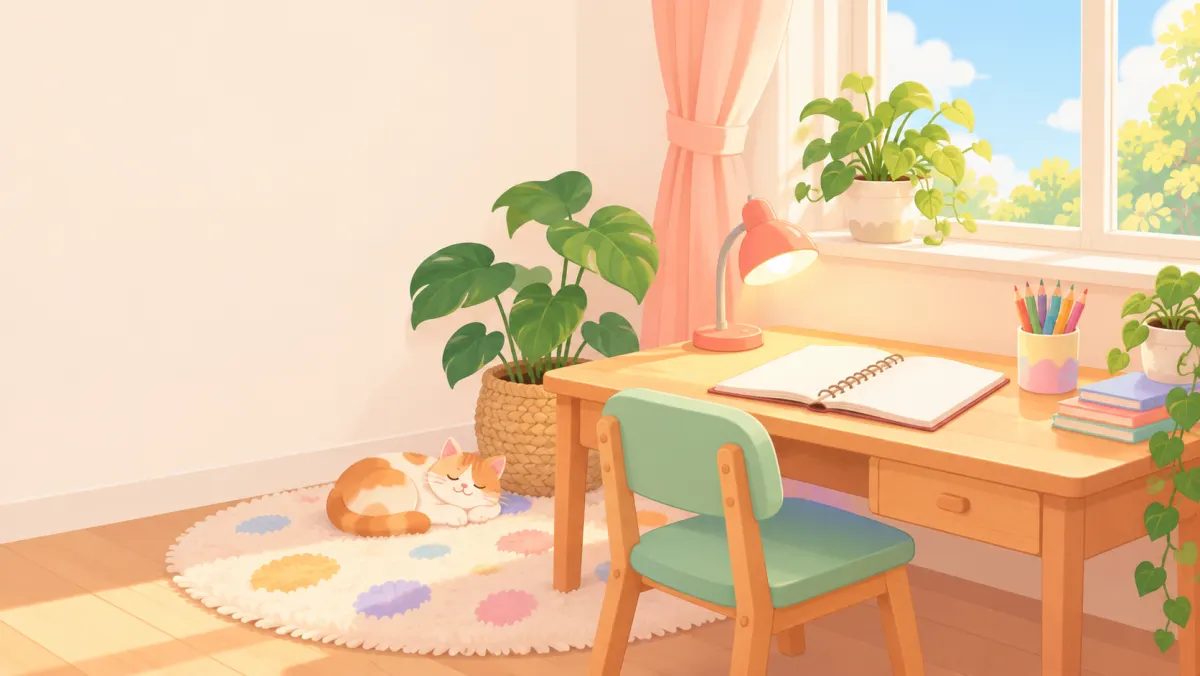
You don't need a separate study room or an expensive desk. A cleared corner of the kitchen table can work beautifully. Choose somewhere with comfortable seating, enough light, and space for a notebook and pencil case. Put away toys, unrelated books, and anything else that might compete for attention. Keep the supplies your child needs within easy reach so searching for an eraser doesn't become another distraction.
Consider what your child finds comforting, too. Some children like a parent working quietly nearby, while others concentrate better with fewer people around. Try turning off background television and putting unnecessary devices out of sight. A small basket for pencils, crayons, and paper can make setup quick. The goal isn't a perfectly decorated workspace. It's a comfortable place where your child knows what they're there to do.
How Do I Break Homework Into Steps?
A whole worksheet can feel like a mountain when you're little. Instead of asking your child to finish everything at once, cover part of the page with a blank sheet of paper. Show them just the first few questions and agree to work through those together. Once they're finished, uncover the next section. This simple approach makes the task feel smaller and gives your child a clear starting point.
You can also create a tiny homework plan together. Ask which assignment they want to tackle first, then divide it into manageable pieces. For example, read the instructions, answer three questions, check the answers, and put the finished worksheet away. Let your child move a small object from one side of the table to the other after completing each step. Those little moments of progress make the work feel less endless.

When Should My Child Take Homework Breaks?
If your child starts wiggling, staring around the room, or repeatedly asking how much longer they have left, a short break may help. You don't need a complicated schedule. Try a small period of focused work followed by a few minutes to move around. Adjust the length to suit your child's age, assignment, and energy. The aim is to make concentration manageable, not to race against a clock.
Keep breaks simple and easy to finish. Your child could stretch like a cat, walk to the kitchen for water, do a silly dance, or look out the window together. Avoid starting an exciting activity that will be difficult to leave. Before the break begins, explain what comes next: 'After we stretch, we'll finish the last two questions.' That gives your child a clear, friendly path back to their work.
How Can I Make Homework More Fun?
Young children often respond well when ordinary tasks feel a little playful. Turn spelling practice into a guessing game, let your child explain a math problem to their favorite stuffed animal, or use colorful counters for simple calculations. You can even invite them to pretend they're a detective looking for the next answer. Keep the actual assignment at the center, but add a little imagination to make starting less intimidating.
Pay attention to effort rather than making every correct answer a big event. Try saying, 'You came back to that tricky question and tried another way,' or 'You finished the first part without giving up.' When your child gets stuck, ask what they think the next step might be instead of immediately supplying the answer. Finish by noticing something they accomplished. Homework should end with a sense of progress, not another argument.
Parents also ask
What should I do when my child refuses to start homework?
Begin with a small choice instead of another command. Ask whether they'd rather start with reading or math, or choose between two pencils. Sit nearby for the first question and keep your tone calm. Sometimes getting started is the hardest part, so make that first step feel manageable.
Should I sit with my child during homework?
You can stay nearby without doing the work for them. Help your child understand the instructions, then give them a chance to try independently. If they get stuck, ask a guiding question. Gradually move back as they become comfortable, while letting them know you're available when needed.
What if my child keeps getting distracted during homework?
First, check whether the assignment feels too big or the workspace has unnecessary distractions. Clear the table, shorten the next task, and offer a quick movement break. Try changing one thing at a time so you can see what helps. Keep your expectations realistic and acknowledge every small success.
Practical ideas from our team, not medical advice. For anything about your child's health, sleep, or development, please check with your pediatrician.
Turn today's idea into their own story
Make a 1-minute animated story where your child is the hero.
Start A Story