
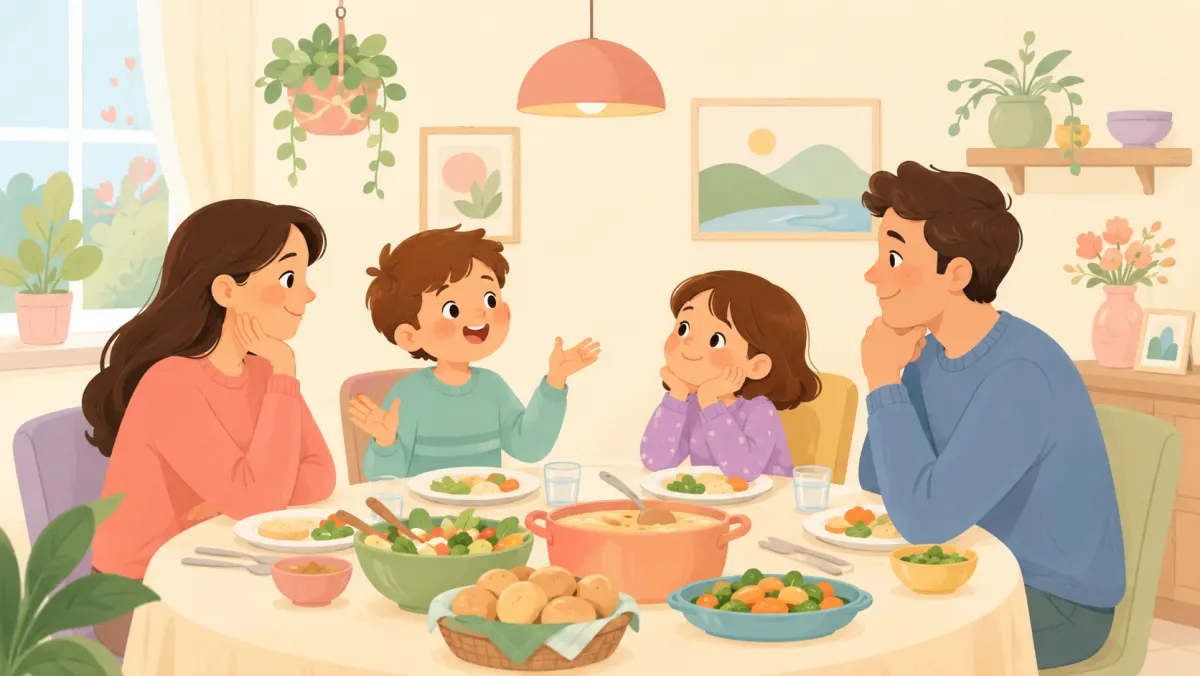
Why Does My Child Give One-Word Answers?
Picture the moment. Your child has just finished a busy day, everyone is hungry, and you ask what happened at school. It is a big question, even though it sounds simple. Your child has to sort through hours of experiences and decide what to share. A quick fine or nothing might simply be the easiest answer while they settle into dinner.
Instead of asking for a report of the whole day, offer something smaller and more specific. Try, What made you laugh today? or What was the strangest thing you saw? Give your child time to think while you take another bite. If they still shrug, share something funny from your day first. Conversation works better when nobody feels responsible for keeping it going alone.
What Are Good Family Dinner Conversation Starters?
The most useful family dinner conversation starters invite stories rather than correct answers. Ask, If your backpack could talk, what would it complain about? What would you name a pet dinosaur? If you could switch jobs with anyone for a day, who would you choose? What was one tiny thing that made today better? These questions give children a clear starting point without making dinner feel like homework.
Mix silly questions with everyday ones. Ask who they helped today, what they would change about their classroom, or which family adventure they would happily repeat. For a fun dinner tradition, write favorite prompts on small pieces of paper and keep them in a jar. Let a different family member choose one each evening. One good question is plenty if everyone starts talking.
How Can Younger Kids Join Dinner Conversations?
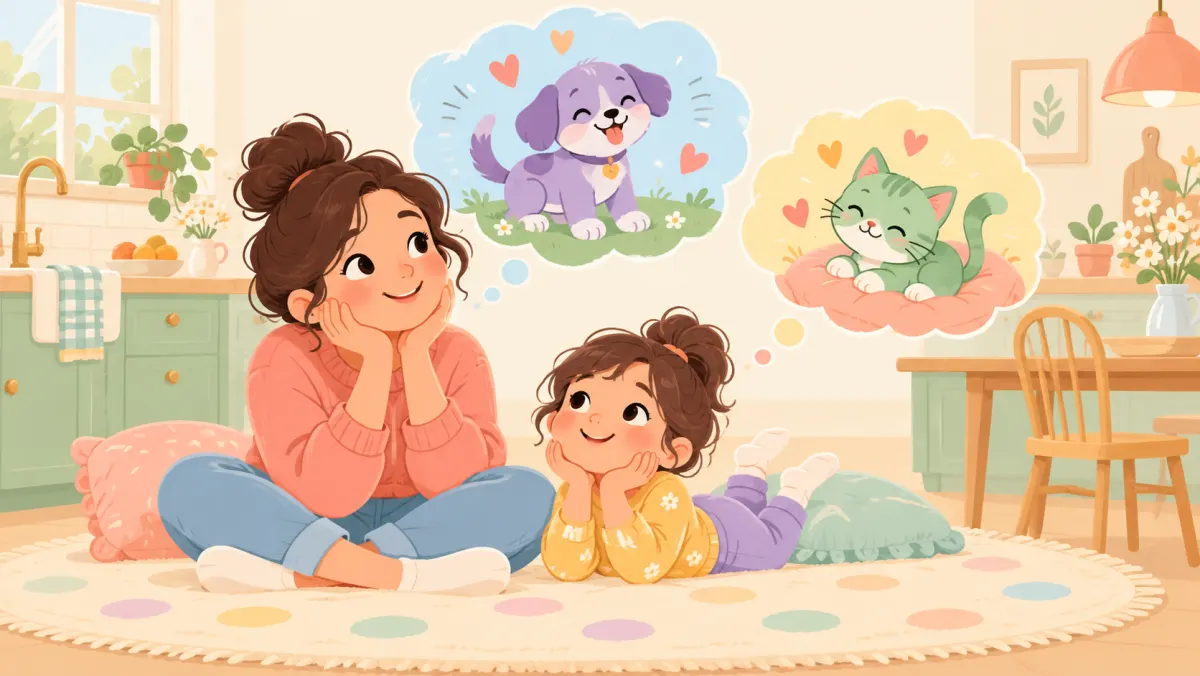
Toddlers and preschoolers do not need long questions to join the fun. Offer two playful choices, such as Would you rather have a purple puppy or a green kitten? Ask them to show you their happiest face or make the sound of an animal they saw today. Pointing, pretending, and acting things out can become part of the conversation. Follow their lead instead of asking for longer answers.
For children who enjoy stories, start a tiny adventure together. Say, A friendly dragon found a sandwich in our backyard. What happened next? Let each person add one detail. Older siblings can join without taking over. If your little one chooses to talk about the same favorite toy every evening, welcome it. Familiar topics can be a comfortable way to participate.

How Do You Make Dinner Talk Fun?
Turn an occasional dinner into a simple storytelling game. Try Three Things, where everyone shares something funny, something surprising, and something they are looking forward to. Another option is Build a Story. One person starts with a sentence about a lost puppy, a mysterious castle, or a magical lunchbox. Each family member adds a sentence until the story reaches a delightfully ridiculous ending.
You can also make your child the hero of an imaginary adventure. Ask what special power they would choose, which family member would be their sidekick, and what problem they would solve. Keep the answers playful rather than correcting the storyline. If everyone gets carried away inventing a flying bicycle or a talking refrigerator, that is a perfectly good dinner conversation.
What If My Child Still Won't Talk?
Some evenings, your child simply will not feel chatty. Resist the temptation to fill every quiet moment with another question. You can say, I am happy we get to sit together, and continue eating. Offer an easy invitation instead of demanding an answer. For example, ask everyone to name a favorite dinner food or choose between visiting the moon and exploring the ocean. Passing is allowed.
If conversations regularly become competitive, give each person room to finish without interruption. Avoid turning every answer into advice, a correction, or another question about responsibilities. Sometimes children share more while clearing plates together or sitting beside you after dinner. The aim is not to extract information every evening. It is to make talking with family feel comfortable enough that stories can happen naturally.
Parents also ask
What should I ask my child at dinner instead of how was school?
Try a specific question with a playful angle. Ask what made them laugh, which part of lunch they enjoyed, or what they would change about their day. Share your own answer first, and allow a little silence while they think. One interesting question is enough.
How do I get siblings of different ages talking together?
Choose questions that everyone can answer in their own way. A preschooler might act out a superpower while an older child explains theirs. Take turns choosing prompts, invite quieter children to participate without pressure, and remind enthusiastic storytellers to leave space for everyone else.
Do we need to have a meaningful conversation every night?
No. Some dinners will be full of stories, while others will be quiet or interrupted by spilled water and requests for more pasta. A silly question, a shared laugh, or a few peaceful minutes together can be enough. Keep conversation inviting rather than making it another family task.
Practical ideas from our team, not medical advice. For anything about your child's health, sleep, or development, please check with your pediatrician.
Turn today's idea into their own story
Make a 1-minute animated story where your child is the hero.
Start A Story