
Why Is My Child Afraid at Night?
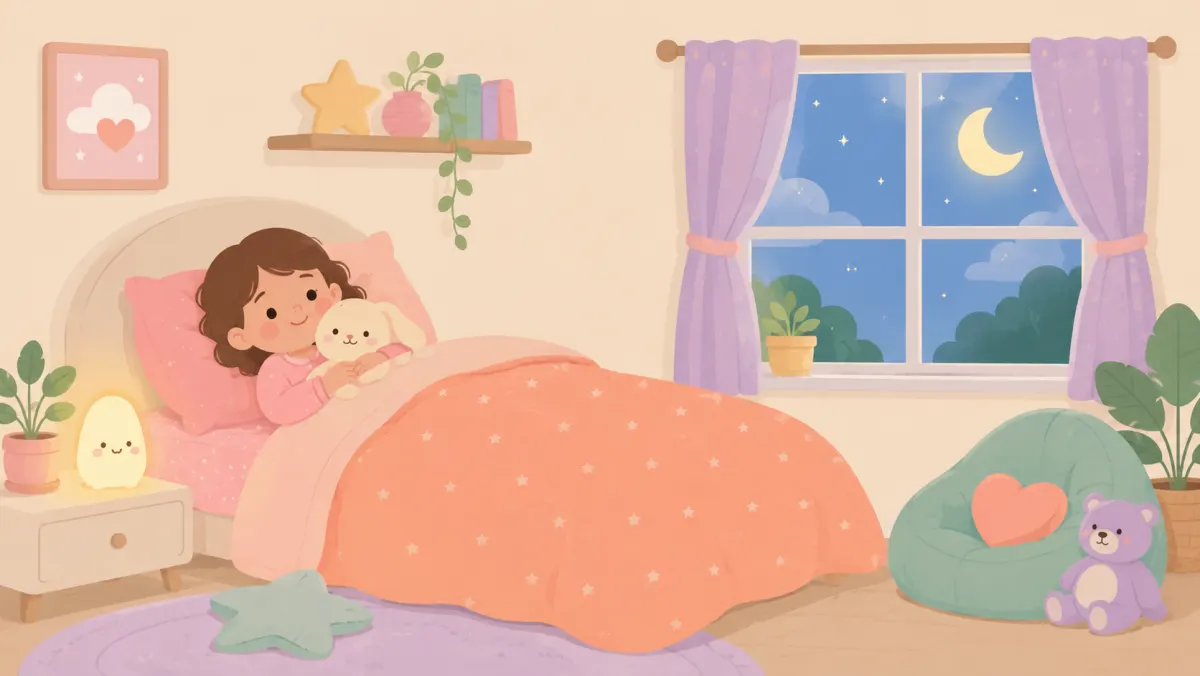
Fear of the dark can grow when a quiet room suddenly feels unfamiliar. Shadows look different, small sounds stand out, and a child who was busy all day has more space to imagine scary things. The goal is not to prove that darkness is harmless. It is to help bedtime feel predictable, familiar, and calm enough for your child to settle.
Tonight, start by taking the fear seriously without making it bigger. Say that you understand the room can feel different when the lights are off, then move into your normal bedtime steps. Keep your voice steady and your response short. Long debates about monsters, burglars, or every possible danger can accidentally turn bedtime into a nightly investigation.
What Should I Say at Bedtime?
Use simple words that name the feeling and point to what happens next. You might say that you know the dark feels scary, you are nearby, and it is time for the same bedtime routine you do every night. A calm sentence repeated consistently is usually more useful than giving five new explanations each time your child asks for reassurance.
Avoid teasing, dismissing the fear, or asking your child to be brave on command. You can be warm without promising that nothing scary will ever happen. Focus on what is true right now: the room is familiar, the bedtime routine is finished, and you will follow the same plan if your child needs one brief check-in.
Should I Leave a Night-Light On?
A small night-light can be a practical bridge if total darkness makes bedtime harder. Choose a dim light that lets your child see the outline of the room without turning the bedroom bright. Place it low or away from the pillow, and keep the setup the same each night so the room looks familiar when your child wakes.
Try not to keep adding brighter lights whenever fear rises. Too much light can make shadows sharper and can turn every bedtime into a negotiation over lamps, hall lights, and open doors. Pick one simple lighting plan, explain it before lights-out, and stick with it for several nights so your child knows exactly what to expect.
How Can I Make Bedtime Feel Safer?
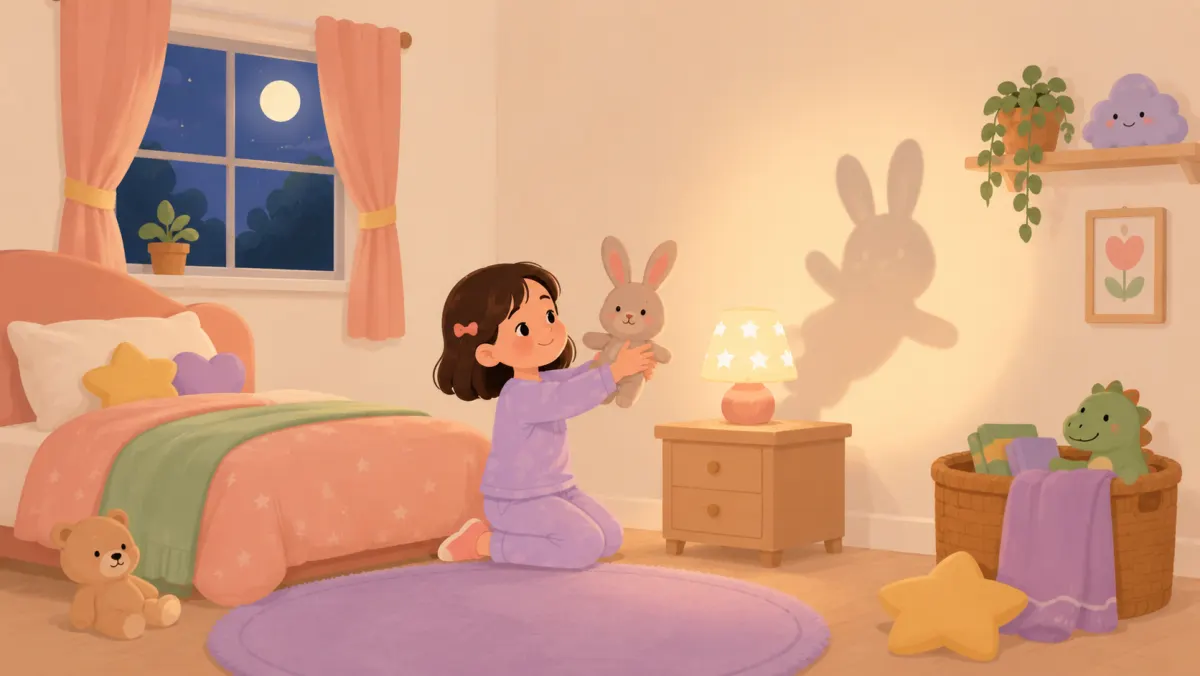
Make the last ten minutes of bedtime boring in the best possible way. Use the same order each night, such as pajamas, bathroom, one short story, a hug, then lights-out. Let your child choose one comfort item before getting into bed. A familiar stuffed animal, blanket, or pillow can become part of the routine without creating extra steps.
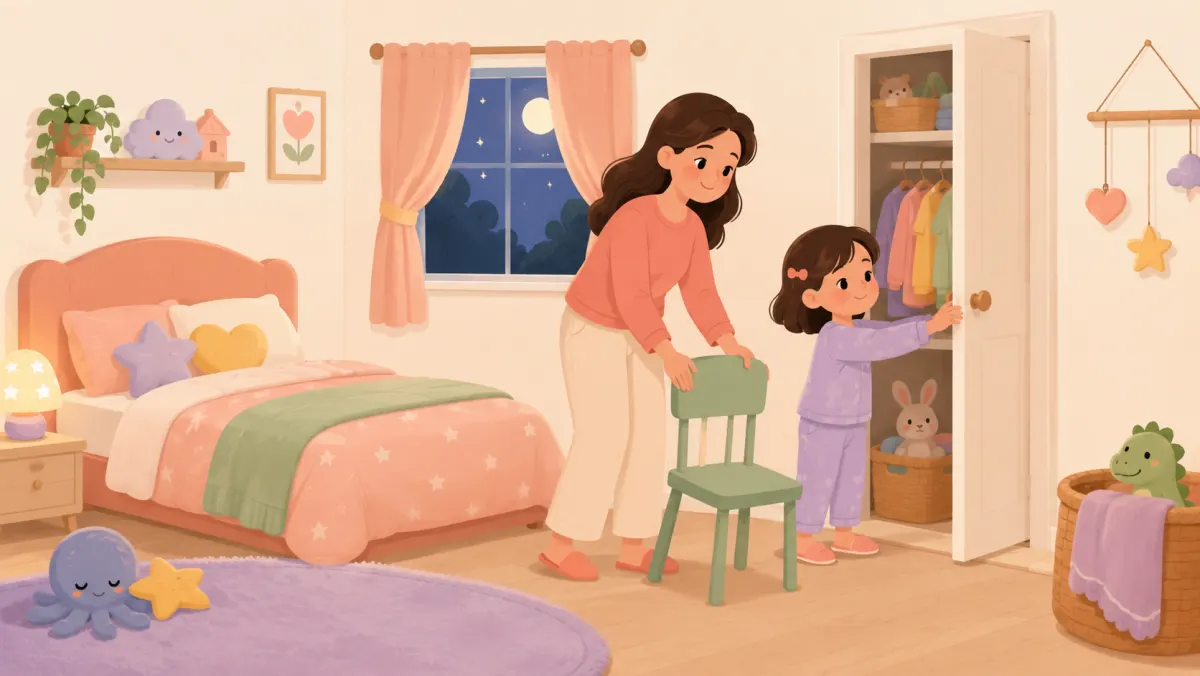
Do one quick room check together before the lights go off. Look under the bed, close the closet, set the night-light, and place a water cup if you normally use one. Then say the check is finished for the night. Repeating the same brief check can feel reassuring, while repeating it over and over can keep the fear active.
What If My Child Calls Me Back?
If your child calls you back, decide on a response you can repeat calmly. Return once, keep the room quiet, use the same short reassurance, and avoid restarting stories, snacks, games, or long conversations. The message is that you will respond with care, but bedtime is still bedtime. Consistency makes the night easier to understand.
If there are several calls, keep each visit shorter and less interesting. You can remind your child that you will check again after a brief period, then follow through if you said you would. In the morning, notice the effort your child made, even if bedtime was not perfect. Praise staying in bed, using the night-light, or settling after a check-in.
Parents also ask
Should I check under the bed for monsters?
One quick check can be part of a calm bedtime routine if it helps your child settle. Keep it brief and matter-of-fact, then end the check for the night. Repeating the search many times can turn it into a bedtime ritual that is harder to finish.
Is it okay to keep the hallway light on?
Yes, if a little light helps your child settle, you can use it as part of the routine. Choose one simple setup and keep it consistent. A cracked door or dim night-light is often easier to manage than changing several lights every time your child feels worried.
What if my child gets scared after waking up?
Use the same calm response you use at bedtime. Keep lights low, speak quietly, offer brief reassurance, and guide your child back to bed. Avoid turning the wake-up into playtime or a long conversation, so the middle of the night stays predictable and boring.
Practical ideas from our team, not medical advice. For anything about your child's health, sleep, or development, please check with your pediatrician.
Turn today's idea into their own story
Make a 1-minute animated story where your child is the hero.
Start A Story